As a final training as a Vivero Fellow, I chose to practice a tool called Hypothes.is. This tool was mentioned in the Scholarship in Graduate School workshop hosted by the Grinnell College librarians, and I wanted to discover more about this tool that allows for collaborative literature review. I also saw a huge potential in the tool for use across disciplines, including STEM, social sciences, and humanities.
Accessing the tool
Hypothes.is is a free tool that only requires a free account and the installation of an extension on Google Chrome (or another equivalent browser). Upon finding an article on a journal website, open the PDF version and then click on Hypothes.is extension icon takes you to the annotation page where you can add highlights and comments. You can share the annotation with another user, which allows for collaborative annotation of the same literature.
Example
I tried using this tool to highlight and annotate chemistry literature for my group presentation.
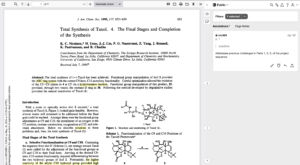
As the screenshot shows, users can add highlight to portions of the article. By clicking on a highlight, a user can add and see text notes about each highlight on the right side of the screen.
Strengths and Shortcomings
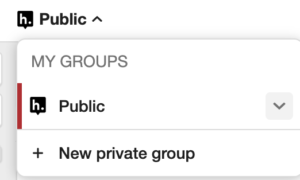
Overall, the biggest strength of Hypothes.is is the ability to collaborate and share the highlights and annotations in a public or private group. By doing so, this tool makes the literature review collaborative. I like that the annotation can be clicked and reviewed one by one, as opposed to seeing all annotations and highlights on one piece of paper, had I printed and annotated all over the paper – which can be confusing and overwhelming.
It was interesting to learn that the software operates using a browser extension to retrieve article and then using the platform to add annotations. While this presents a possible issue of accessing the tool from mobile device, its major potential weakness is the lack of tools to annotate figures and images collaboratively, which could be particularly helpful for reviewing literature with graphs and figures.